
Sometimes the first sign of dyslexia isn't a child who can't read. It's a child who can tell you every detail of a story when you read it aloud but struggles when they have to read the same page on their own. Or it's the child who knows the answer in class but can't get it onto paper. The child who studies spelling words every night, gets them right on Friday, and seems to have forgotten them by Monday.
Dyslexia doesn't always look the way people expect.
It affects skills involved in reading and language, including connecting letters with sounds, sounding out unfamiliar words, reading accurately and fluently, and spelling. But it can look different from one child to another. The signs also change as children get older and the demands at school change.
Some children struggle as soon as reading instruction begins. Others find ways to keep up for years. They memorize words, listen closely, use context, or simply work much harder than anyone realizes. Their difficulties may not become obvious until the reading and writing demands increase.
Every child forgets a letter sound, misreads a word, or spells something incorrectly sometimes. That's part of learning. What deserves a closer look is when the same difficulties keep showing up, especially when a child has had appropriate instruction and plenty of practice.
Signs of Dyslexia in Preschool
You don't have to wait until a child starts reading to notice possible signs of dyslexia. Some can appear much earlier, while children are developing the language skills they'll eventually use to read.
A preschooler may have trouble recognizing that "cat" and "hat" rhyme. Learning the alphabet might take longer. They may know what they want to say but struggle to find the word, so you hear a lot of "that thing" or "you know, the thing we use for..."
You might notice that a child:
Has difficulty recognizing or coming up with rhyming words
Struggles to learn nursery rhymes or songs
Has trouble learning or remembering letter names
Has difficulty remembering the alphabet in order
Frequently mispronounces familiar or longer words
Has trouble remembering sequences
Uses words such as "thing" or "stuff" when they can't find the word they want
Has difficulty following directions with several steps
Has a family history of dyslexia or significant reading difficulties
None of these signs by itself means a preschooler has dyslexia. Young children develop at different rates, and preschoolers aren't expected to be independent readers. Still, several signs appearing together over time are worth paying attention to, particularly when dyslexia or reading difficulties run in the family.
Signs of Dyslexia in Kindergarten Through Second Grade
This is often when the differences become easier to see. Children are being taught how reading works, and for a child with dyslexia, that process can take much more effort. A child may know the letters M, A, and P but have trouble blending /m/ /a/ /p/ into "map." Or they may work hard to sound out a word correctly, then reach that same word a few lines later and need to figure it out all over again.
Words don't seem to stick. You may also see guessing. Instead of reading the whole word, the child looks at the first letter, the picture, or the rest of the sentence and guesses what would make sense.
Signs at this age can include:
Difficulty learning which sounds go with which letters
Trouble breaking spoken words into individual sounds
Difficulty blending sounds together to make a word
Trouble sounding out unfamiliar words
Difficulty remembering words they've seen many times
Reading a word correctly on one page but not recognizing it on the next
Guessing words based on the first letter, a picture, or context
Confusing similar letters or sounds
Difficulty remembering spelling patterns
Spelling the same word differently from one day to the next
Reading slowly or needing much more time to complete reading work
Avoiding reading aloud or becoming frustrated when asked to read
Parents often notice something else at this age. Their child understands much more than their reading suggests. You might have a child who can explain how volcanoes work in great detail after watching a documentary, then struggle to read a short paragraph about volcanoes in a book. That gap matters.
Signs of Dyslexia in Later Elementary School
By third, fourth, and fifth grade, school starts to feel different. Children are still developing their reading skills, but now they're increasingly expected to use reading to learn. There are longer books. More written directions. Word problems. Textbooks. Independent assignments. A child who managed fairly well in the early grades may suddenly have a much harder time keeping up.
Signs may include:
Reading much more slowly than classmates
Difficulty sounding out unfamiliar or longer words
Skipping, adding, or changing words while reading
Leaving out small words when reading aloud
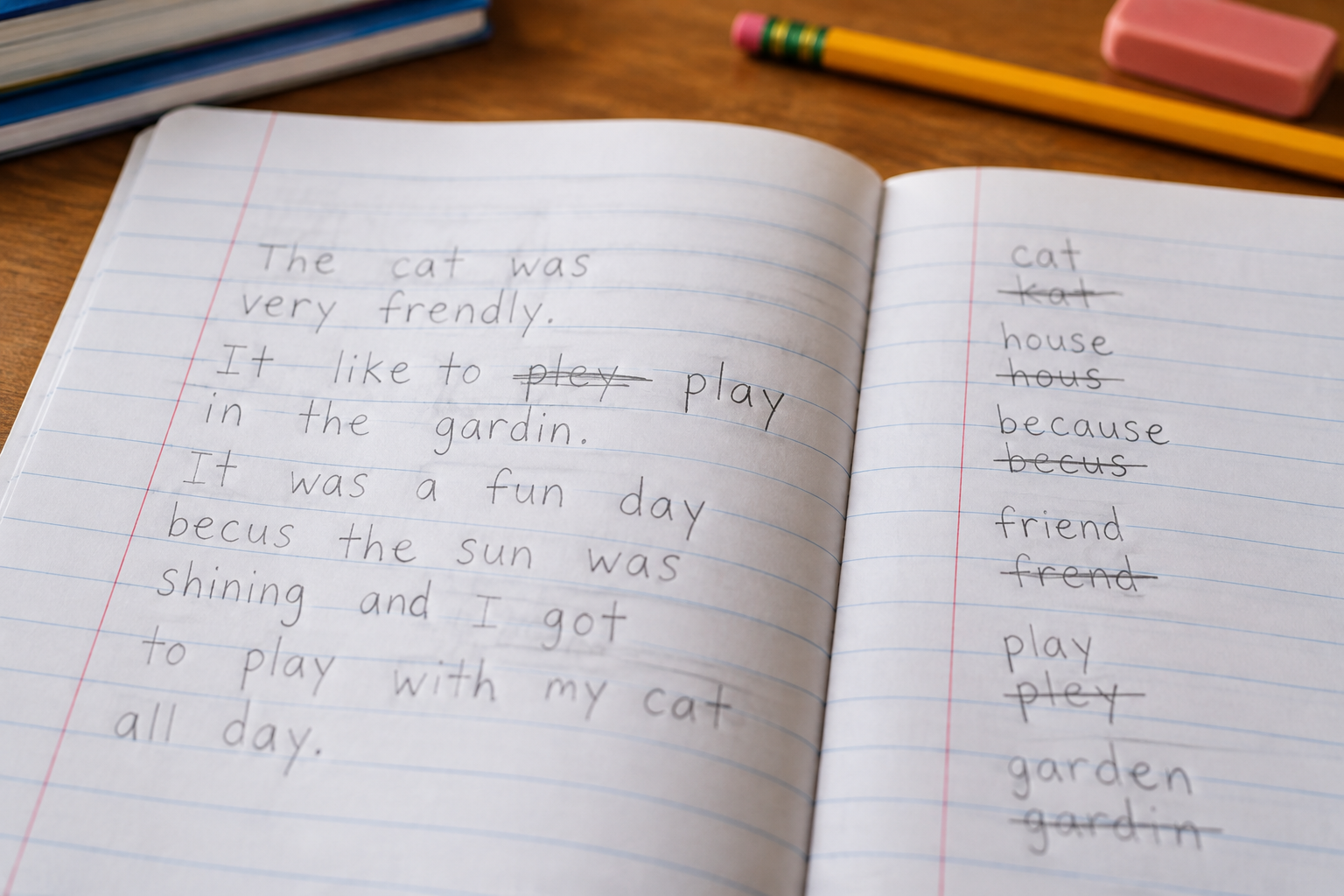
Continuing to struggle with spelling
Spelling the same word several different ways
Taking much longer than expected to complete reading homework
Avoiding reading whenever possible
Having difficulty explaining or summarizing something they've read
Understanding material much better when someone reads it aloud
Struggling to put ideas into writing even when they can explain those ideas verbally
Becoming frustrated or overwhelmed by longer reading assignments
Sometimes you'll see the difference very clearly. A child reads a chapter independently and can't answer many questions about it. You read the same chapter aloud, ask the same questions, and suddenly they know the answers. The child may understand the material perfectly well. Reading the words required so much attention that following and remembering the content became much harder.
This is also an age when children become more aware of how they compare with their classmates.
"I hate reading."
"This book is boring."
"Can you just read it to me?"
And sometimes there's no complaint at all. Reading homework simply gets pushed off. Suddenly the child needs a snack, can't find a pencil, has to use the bathroom, or remembers something upstairs. That can look like procrastination. Sometimes it is. But sometimes a child has figured out that reading is exhausting, frustrating, or embarrassing and would rather do almost anything else.
Signs of Dyslexia in Middle and High School
Dyslexia doesn't disappear once a child learns to read.
By middle and high school, many students have spent years figuring out ways to compensate. They recognize more words automatically. They use context. They listen carefully in class. Some rely on audiobooks, text-to-speech, speech-to-text, or help from parents and teachers.
They may be able to read accurately. But slowly. A 20-page reading assignment can take most of the evening. A student may finish a page and realize they don't remember much of what they just read because so much attention went into getting through the words.
Signs in older students may include:
Reading accurately but much more slowly than peers
Needing significantly more time to complete reading assignments
Avoiding reading aloud
Difficulty decoding unfamiliar or multisyllabic words
Persistent spelling difficulties
Mispronouncing unfamiliar names or longer words
Trouble taking notes while listening to a teacher
Difficulty organizing written assignments
Knowing the answer but struggling to express it clearly in writing
Frequently searching for the right word when speaking
Difficulty remembering names, dates, sequences, or other information
Performing better when information is presented verbally
Becoming overwhelmed by assignments that require large amounts of reading or writing
Writing can reveal another gap.
Ask a teenager a question out loud and you might get a thoughtful, detailed answer. Put the same question on a worksheet and ask for a written response, and you may get two short sentences. That difference is worth noticing.
Good Grades Don't Rule Out Dyslexia. A student can have dyslexia and still earn good grades. Some students become very good at compensating for their reading difficulties. They memorize. They listen closely in class. They use context to figure out words they can't easily decode. They ask parents for help. They stay up late finishing assignments.
From the outside, everything may look fine because the report card looks fine. But look at what it takes to get those grades.
Imagine two students who both earn an A on the same history test. One studied for 45 minutes. The other spent three nights rereading the chapter, listened to part of it through text-to-speech, asked a parent to explain several sections, and made flash cards because the information wasn't sticking through reading alone. The grade is the same. The amount of work behind it isn't. A student who routinely spends three hours completing work that takes classmates an hour is telling us something. So is the child who needs a parent to read every science chapter aloud.
Grades give us useful information. They don't give us the whole picture. Sometimes the better question isn't, "Can my child do the work?" It's, "What does it take for my child to do the work?"
Dyslexia Isn't Just About Reversing Letters
One of the most common misconceptions about dyslexia is that it means seeing letters or words backwards. A child writes b instead of d, and someone immediately wonders about dyslexia. Letter reversals can happen in children with dyslexia, but they're also common in young children who are learning to read and write. Dyslexia isn't defined by seeing letters backwards.
More meaningful signs tend to involve persistent difficulty working with the sounds in words, connecting those sounds with letters, sounding out unfamiliar words, developing fluent reading, and spelling. Some children with dyslexia rarely reverse letters at all. If you're waiting to see backwards letters before considering dyslexia, you may miss the signs that tell you much more.
Look at the Pattern, Not One Sign
Almost every child will struggle with reading, spelling, remembering a word, or following directions once in a while. What raises concern is when the difficulties persist and seem out of step with a child's abilities in other areas.
Maybe your child can build an elaborate LEGO set without looking at the directions twice. They can explain exactly how something works. They remember every detail from a documentary they watched two months ago. They can talk for 20 minutes about their favorite subject. Then they struggle to read a relatively simple paragraph. Those things can exist together.
Dyslexia isn't a reflection of intelligence, and a child's strengths don't cancel out their reading difficulties. In fact, sometimes those strengths are exactly what allow a child to compensate for dyslexia for years before anyone realizes how hard they're working.
When Should You Look More Closely?
Pay attention when the same difficulties keep appearing. Is reading much harder than other areas of learning? Does your child understand information easily when they hear it but struggle when they have to read it? Is spelling still unusually difficult despite practice? Has your child received solid reading instruction but isn't making the progress you'd expect?
Pay attention to effort, too. Sometimes a child technically can do something, but they're working incredibly hard to do it. That matters.
If you're seeing a pattern, start keeping track of what you're noticing. Save a few examples of schoolwork. Talk with your child's teacher and ask specific questions about phonemic awareness, decoding, reading fluency, and spelling. If the difficulties continue, an evaluation can help identify what's happening and what kind of support may be needed.
You don't have to wait until a child is failing.
The goal is to understand why reading is hard for this particular child. Once you understand that, you have much better information about what they need.